



Workers Compensation
We consistently obtain substantial
settlements without a lengthy trial.

Personal Injury
Maximizing your
injury compensation.

Wrongful Death
Helping you pursue a claim against the other
party’s insurance company for your loss.
Recent News
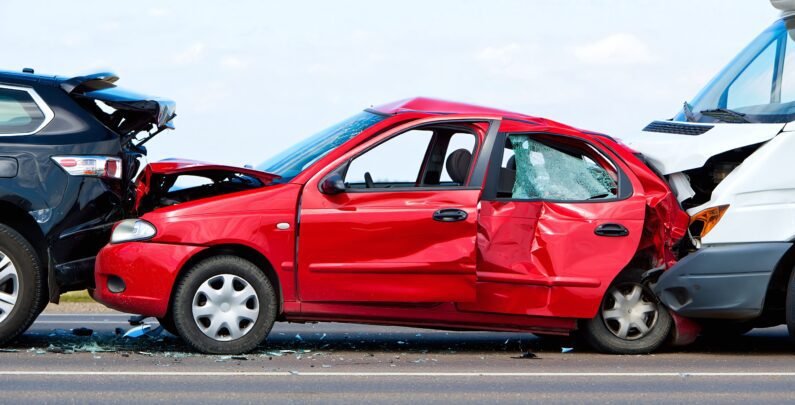
How Can I Tell Who Was at Fault After a Chain-Reaction Crash?
Chain reaction car accidents are disorienting. You may not remember who hit first. You may not know whether you were pushed into the car ahead of you or whether someone farther back caused the entire chain of events. That uncertainty can feel terrifying, especially when you’re worried about being wrongly blamed or losing out on the compensation you need to recover.
At Brassfield & Krueger, our car accident attorneys have spent over 75 years helping car accident victims in situations exactly like these. We want you to know that not remembering every detail doesn’t hurt your case. There are established legal processes designed to determine fault in chain-reaction crashes so you can seek the compensation you deserve.
Here’s how fault is typically determined in a chain-reaction crash:
- Police Analysis: Officers analyze the scene to identify the initial impact
- Witness Statements: Unbiased observers help clarify the timeline of collisions
- Video Footage: Dashcams and traffic cameras provide objective proof of the sequence of events
- Legal Investigation: Attorneys often do their own independent investigations to minimize liability for their clients
How Does Fault Work When There Are Multiple Drivers?
In most chain-reaction crashes, the driver who triggers the first impact bears primary responsibility. This is often the person who rear-ends another vehicle, causing a domino effect. However, fault isn’t always that straightforward.
Illinois follows a modified comparative negligence rule. This means multiple drivers can share responsibility based on their individual actions. For example:
- If the first driver was speeding and failed to brake in time, they may be primarily at fault
- If the second driver was tailgating too closely to stop safely, they could share some of the blame
- If a third driver was distracted and contributed to the pile-up, they might also bear partial responsibility
The key point here is this: just because you were involved in a multi-car accident doesn’t automatically make you liable for everyone else’s damages. Each driver’s actions are evaluated separately. You might have done everything right, yet still ended up in the middle of the chaos through no fault of your own.
How Is Fault Determined in a Multi-Car Accident?
When multiple vehicles are involved in a collision, determining fault is rarely straightforward. Investigators and legal professionals use several methods to piece together the sequence of events.
The Role of the Police Report
One of the primary sources of information is the police report. Officers who respond to the scene conduct an initial investigation, but it’s important to remember they arrive after the fact. They did not witness the collision firsthand. Instead, they make an assessment based on evidence available at the scene, such as:
- The final resting positions of the vehicles
- Patterns of damage on each car
- Skid marks on the road
- Statements from drivers and witnesses
- Prevailing weather and road conditions
While police reports are considered valuable evidence and carry significant weight in insurance claims, they are not infallible. Officers can miss crucial details, especially in the chaos of a multi-car pile-up where debris is scattered, and emotions are high.
Once the police report is available, review it meticulously for inaccuracies or omissions. If you find any discrepancies, document them immediately. An experienced attorney can help you challenge incorrect parts of the report and introduce additional evidence to present a more complete picture of what truly happened.
The Importance of Witness Statements
Another way fault is determined is through the testimony of third-party witnesses. Bystanders on the sidewalk, uninvolved drivers in adjacent lanes, or passengers in other vehicles often have a clearer, more objective view of the accident as it unfolded. Because they were not inside a crashing vehicle, they may have observed critical actions that you were physically unable to see.
Key benefits of witness statements:
- They offer an unbiased perspective on the collision.
- They can help establish the sequence of collisions.
- They might have noticed negligent driver behaviors, such as texting, speeding, or running a red light.
- Their accounts can either support or contradict the claims made by other drivers.
This is why collecting witness contact information at the scene is so critical. If you are unable to do so, the police may have gathered it for their report.
Using Technology to Uncover the Truth
In addition to traditional methods, video evidence is a powerful tool for cutting through the conflicting “he said, she said” accounts that often complicate car accidents. Most often, video evidence comes from:
- Dashcams: If any of the involved vehicles had a dashcam, the footage could provide an indisputable record of the collision.
- Traffic Cameras: Many intersections and major highways are monitored by cameras that may have recorded the incident, offering a bird’s-eye view of the events.
- Surveillance Footage: Security cameras from nearby businesses or homes might have captured the accident from a different angle.
This type of video evidence provides an objective timeline that is extremely difficult for an at-fault party to dispute.
Why Should You Work With an Attorney After a Multi-Car Accident?
Working with a skilled attorney after any car accident is a wise step toward protecting your rights and seeking fair compensation. However, their assistance becomes especially crucial in a complex, multi-car collision where fault is under investigation.
An experienced legal team can manage the intricate process of building a strong case on your behalf. They often collaborate with accident reconstruction specialists to analyze vehicle damage, impact speeds, and driver behavior, creating a clear, objective timeline of events.
Furthermore, your attorney will handle the legal legwork required to secure key evidence. This includes gathering phone records to investigate potential distracted driving, obtaining video from traffic or surveillance cameras, and interviewing witnesses to clarify conflicting accounts. By systematically assembling all available evidence, a legal professional can effectively limit your liability and help you pursue the full compensation you deserve.
Get the Answers You Deserve
Chain-reaction crashes are complicated. Determining fault involves piecing together witness accounts, police analysis, and video recordings. But you don’t have to solve this puzzle alone.
While you focus on recovering from your injuries, our team at Brassfield & Krueger can handle the investigation, deal with insurance companies, and fight for the compensation you deserve. Start the conversation with us today; we’re here to listen and help.
Related News
How Can I Tell Who Was at Fault After a Chain-Reaction Crash?
Chain reaction car accidents are disorienting. You may not remember who hit first. You may not know whether you were…Read More
How Does a Wrongful Death Lawsuit Work?
Losing someone you love in a preventable accident is devastating. Grief consumes you, and practical matters feel impossible. You may…Read More
Who Can Be Held Liable for Construction Site Injuries?
Construction sites are dangerous places. When an accident happens, your whole life changes in an instant. You might feel scared…Read More
Schedule A Free No Obligation Consultation
For your convenience, we have offices in Rockford and Streator.

Attorney Advertising. This information is designed for general information only. The information presented should not be construed to be formal legal advice nor the formation of a lawyer/client relationship. Past results and testimonials are not a guarantee, warranty, or prediction of the outcome of your case, and should not be construed as such. Past results cannot guarantee future performance. Any result in a single case is not meant to create an expectation of similar results in future matters because each case involves many different factors, therefore, results will differ on a case-by-case basis. By providing contact information, users acknowledge and give explicit consent to be contacted via the methods of communication provided, including SMS. Message and data rates may apply. Message frequency may vary. Reply STOP to opt out.
NUVEW | Copyright 2026 - All Rights Reserved | Accessibility Notice | Privacy Policy