



Workers Compensation
We consistently obtain substantial
settlements without a lengthy trial.

Personal Injury
Maximizing your
injury compensation.

Wrongful Death
Helping you pursue a claim against the other
party’s insurance company for your loss.
Recent News
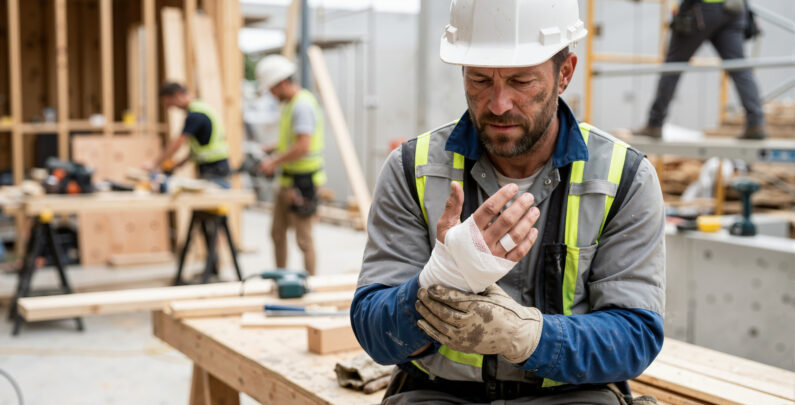
Can Equipment Manufacturers Be Liable for Construction Accidents?
Sometimes, you know something went wrong before you know exactly what went wrong. Maybe the excavator was making a strange noise, the lift would not respond properly, a saw behaved unpredictably, or another piece of equipment simply did not seem to be working the way it normally did. Then, in a matter of seconds, you were injured.
Now you may be trying to piece together what happened while worrying that someone will say the accident was your fault. Was the equipment defective? Was a safety feature missing? Had the manufacturer been warned about the problem? Had the machine been recalled?
These questions matter because the company that made the equipment may be held liable if there were:
- Product defects that made the equipment unsafe.
- Maintenance negligence that caused or contributed to an equipment failure.
- Equipment recalls involving a known safety problem.
- Manufacturer documentation that revealed problems, inadequate instructions, or a failure to warn.
At Brassfield & Krueger, we have represented construction accident victims for more than 75 years. We know what it takes to hold equipment manufacturers accountable and to investigate the part they play in these accidents. If you were hurt by a piece of equipment on the job, we are ready to help.
How Can a Defective Piece of Construction Equipment Make the Manufacturer Liable?
Manufacturers have a responsibility to produce reasonably safe equipment for its intended use. When they fall short, the injured worker often pays the price. A defect can create manufacturer liability because the worker may have been hurt by unsafe equipment, not because the worker did anything wrong.
Equipment defects generally fall into three categories:
- Design defects: The equipment is inherently dangerous because of the way it was designed, even when built correctly.
- Manufacturing defects: Something went wrong during production, and the individual piece of equipment was not made according to its intended design.
- Failure-to-warn defects: The equipment came with inadequate safety warnings or instructions about known risks.
Proving a defect requires solid evidence. The damaged equipment itself is often the most direct form of proof, supported by photographs, videos, and inspection reports. Maintenance records, engineering information, and incident reports can also reveal whether a defect existed before the accident occurred. Witness statements and testimony from qualified professionals further strengthen a case by offering firsthand accounts and professional analysis. Together, this evidence can paint a clear picture of what went wrong and who bears responsibility.
Can Poor Maintenance or a Failure to Address an Equipment Problem Make the Manufacturer Responsible?
Not every maintenance problem automatically makes the manufacturer liable, and that is an important distinction to understand. In many cases, maintenance falls to the employer or an equipment owner. Still, a manufacturer may share responsibility in certain situations.
Liability may arise when the manufacturer:
- Was responsible for maintaining the equipment
- Provided inadequate maintenance instructions
- Failed to address a known mechanical problem
- Otherwise contributed to the dangerous condition
Even a minor equipment problem can escalate into a serious construction accident when someone ignores it or fails to address it properly. Determining who bears responsibility often comes down to the paper trail: maintenance schedules, service records, repair invoices, inspection logs, and any communications about known equipment problems. These records can reveal exactly when someone first reported an issue and whether anyone acted on it, which can make all the difference in a liability case.
What Does an Equipment Recall Have to Do With My Construction Accident?
If the equipment involved in your accident was subject to a recall, that fact can carry real weight in your injury claim. A recall can be significant evidence that a manufacturer knew or discovered a safety problem with its equipment.
A recall does not automatically establish liability. It does raise important questions, though, about when the manufacturer learned of the defect, what the company knew, and whether it provided proper warnings or corrective measures.
Several types of records can help clarify the recall picture:
- Recall notices
- Manufacturer communications
- Government recall records
- Service bulletins
- Dealer communications
- Documentation showing whether the equipment owner or operator received notice
Timing matters here. If a recall came out before your accident, it may show the manufacturer was aware of the danger and had a chance to act.
Can the Manufacturer’s Own Documents Help Prove What Went Wrong?
Beyond recalls, a manufacturer’s own paperwork can open a window into what the company knew about its equipment and its potential risks. These documents often tell a story that spoken accounts cannot.
Relevant documents may include:
- Operating and safety manuals
- Maintenance instructions
- Technical service bulletins
- Safety warnings
- Recall notices
- Inspection requirements
- Repair recommendations
- Internal records concerning known equipment problems, when obtainable through the legal process
Together, these records can help establish whether the equipment was properly designed, whether the manufacturer disclosed known risks, and whether required maintenance or repairs were adequately addressed.
Talk to a Construction Accident Attorney About Your Options
Being injured while operating equipment does not mean you caused the accident. Often, the machine itself, or the company that made it, played a larger role.
Figuring out whether an equipment manufacturer can be held liable requires a close look at the equipment, its history, its maintenance, the warnings, any recalls, and the circumstances of your accident.
This is a lot to sort through while you are trying to heal. That’s why the construction accident attorneys at Brassfield & Krueger can investigate potential claims against the manufacturer and any other parties who may share responsibility. Schedule a consultation with us today, and let us help you find out where you stand.
Related News
Can Equipment Manufacturers Be Liable for Construction Accidents?
Sometimes, you know something went wrong before you know exactly what went wrong. Maybe the excavator was making a strange…Read More
What Types of Injuries Qualify for Workers’ Compensation?
You got hurt at work, and now the questions are piling up faster than the bills. Will your injury actually…Read More
How Can You Tell If a Head Injury Will Have Long-Term Effects?
After your accident, you were told it was just a concussion. Rest up, take it easy, and you should be…Read More
Schedule A Free No Obligation Consultation
For your convenience, we have offices in Rockford and Streator.

Attorney Advertising. This information is designed for general information only. The information presented should not be construed to be formal legal advice nor the formation of a lawyer/client relationship. Past results and testimonials are not a guarantee, warranty, or prediction of the outcome of your case, and should not be construed as such. Past results cannot guarantee future performance. Any result in a single case is not meant to create an expectation of similar results in future matters because each case involves many different factors, therefore, results will differ on a case-by-case basis. By providing contact information, users acknowledge and give explicit consent to be contacted via the methods of communication provided, including SMS. Message and data rates may apply. Message frequency may vary. Reply STOP to opt out.
NUVEW | Copyright 2026 - All Rights Reserved | Accessibility Notice | Privacy Policy